Why 2026 Is the Year Konjac Goes Mainstream in the US and Europe
The global konjac market is projected to reach $2.5 billion by 2033, with North America growing at 9.08% CAGR—the fastest of any region. EFSA-approved health claims, the rise of “fiber-maxxing,” zero-carb keto appeal, and ready-to-eat product innovation are driving konjac from niche Asian ingredient to mainstream US and European supermarket staple.
Why 2026 Is the Year Konjac Goes Mainstream in the US and Europe
For decades, konjac remained a niche ingredient—familiar to consumers in Japan, China, and Southeast Asia, but largely unknown in Western kitchens. That is changing. Rapidly.
2026 marks a tipping point. Driven by converging trends in health, regulation, and consumer behavior, konjac is moving beyond specialty health food stores into mainstream supermarkets, restaurant menus, and e-commerce carts across the United States and Europe. Here is why.
The Numbers Tell the Story
The global konjac market is expanding at an accelerating pace. Valued at approximately $1.43 billion in 2025**, it is projected to reach **$1.92 billion by 2031, growing at a compound annual growth rate (CAGR) of 6.60%. Other industry forecasts are even more optimistic, estimating the market could reach $2.5 billion by 2033 at a CAGR of 8.8%.
But the real story lies in regional growth. While Asia-Pacific still holds the largest market share at 45.68%, North America is projected to record the fastest regional CAGR at 9.08% through 2031. The US konjac market alone is expected to grow from $390 million in 2025 to $630 million by 2035. Europe is following closely, with Germany forecast to grow at approximately 5.7% CAGR, driven by strong regulatory discipline and mature demand for plant-based, reduced-calorie, and fiber-enriched products.
The konjac noodles segment—the most visible consumer product—was valued at $1.4 billion in 2026** and is projected to reach **$2.8 billion by 2033, growing at an impressive CAGR of 10.1%.
These are not niche numbers. This is a category entering the mainstream.
Driver 1: The Rise of "Fiber-Maxxing" and Gut Health Awareness
One of the most significant cultural shifts in 2026 is the rise of “fiber-maxxing,” a TikTok-led movement where consumers actively seek to maximize their daily fiber intake. Whole Foods Market’s “Next Big Things 2026” report confirms it: fiber-forward labels are appearing on pastas, breads, crackers, and snack bars.
Ingredients like chicory root, cassava, and konjac are now “everywhere,” praised for being gentle on digestion and rich in prebiotics. Konjac’s glucomannan fiber acts as a prebiotic, feeding beneficial gut bacteria and supporting digestive wellness.
This is not a passing fad. Consumer interest in gut health has moved from the wellness fringe to the dietary mainstream, and konjac—with its high soluble fiber content and scientifically supported benefits—is perfectly positioned to meet this demand.

Driver 2: EFSA-Approved Health Claims—A Regulatory Seal of Approval
Perhaps the most powerful catalyst for konjac’s mainstream adoption in Europe is regulatory recognition.
The European Food Safety Authority (EFSA) has authorized two specific health claims for konjac glucomannan:
Weight loss in the context of a calorie-restricted diet (3 g/day)
Cholesterol reduction (4 g/day)
Glucomannan is one of the few botanical ingredients with EFSA-approved health claims under Regulation (EU) 432/2012. This is not marketing fluff—it is a regulatory seal of approval that allows manufacturers to make substantiated health claims on product labels.
In the United States, the FDA has also determined that scientific evidence suggests glucomannan can help reduce blood cholesterol. These regulatory endorsements remove a major barrier for food brands considering konjac-based product lines: they can now communicate clear, credible health benefits to consumers.
Driver 3: The Perfect Fit for Keto, Low-Carb, and Gluten-Free Diets
The ketogenic and low-carbohydrate diet movement has reshaped the food industry. An estimated 12 to 15 million active keto practitioners in the US alone as of 2025. For these consumers, traditional pasta and rice are off the menu.
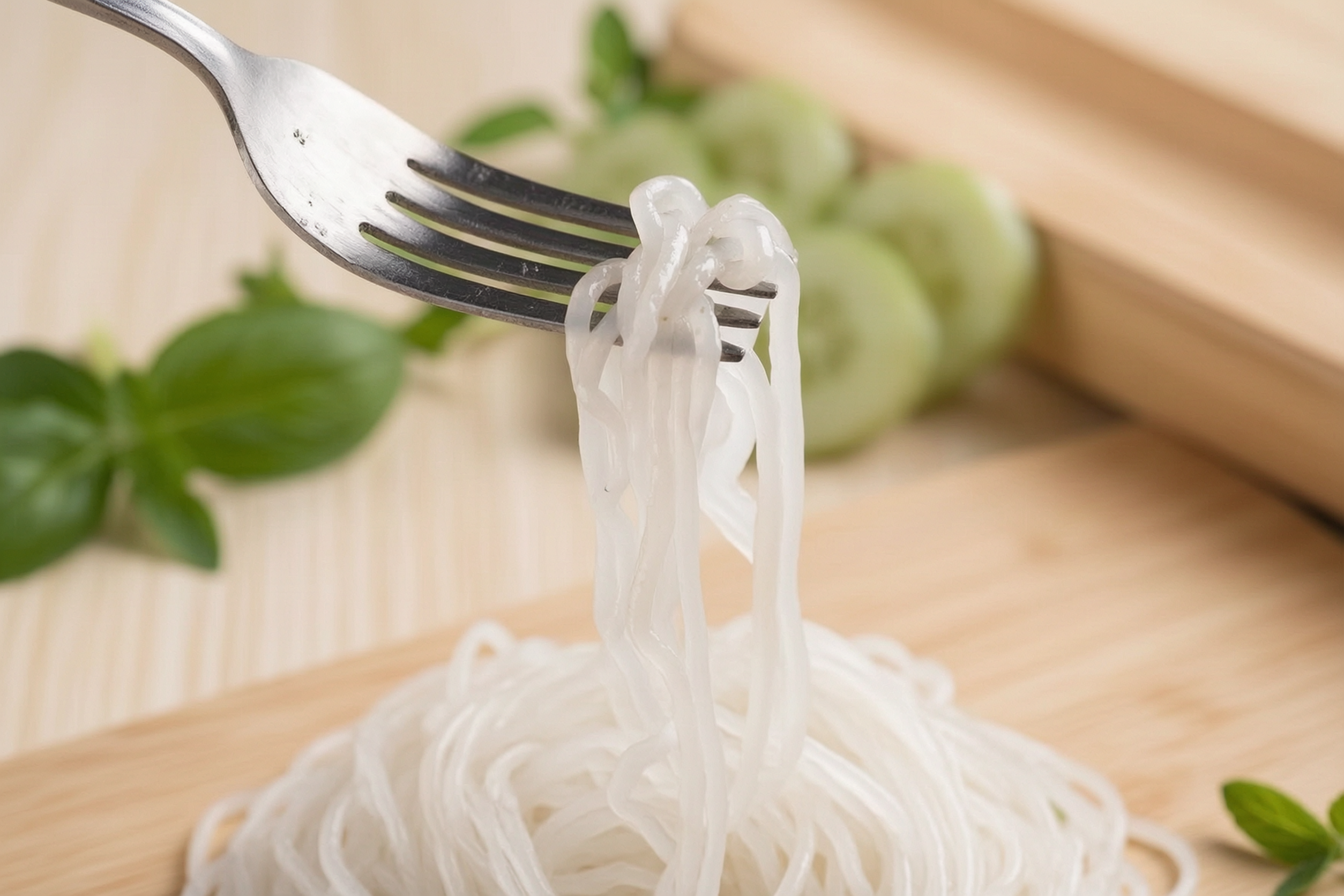
Konjac offers a solution: zero net carbs. Because glucomannan fiber passes through the body without being converted into glucose, it does not spike blood sugar or kick consumers out of ketosis. A typical serving of konjac noodles contains roughly five calories and one net carb.
This is not just about keto. The expansion of vegan, vegetarian, and gluten-free dietary lifestyles has further strengthened demand across North America and Europe. Konjac fits every major dietary trend—low-calorie, low-carb, gluten-free, plant-based, and high-fiber.

Driver 4: Product Innovation and Ready-to-Eat Convenience
Konjac is no longer just a bag of dry noodles on a specialty shelf. The category is diversifying rapidly.
In March 2025, It's Skinny debuted ready-to-eat pasta meals built around konjac noodles, including flavors like Truffle Parm. Brands like Miracle Noodle, Slendier, Better Than Foods, and NOoodle are building entire product lines around konjac as a fiber-based, low-carbohydrate base ingredient.
Konjac jelly drinks—zero sugar, five calories, gluten-free, and keto-friendly—are gaining popularity among Gen Z and Millennial consumers, with social media platforms like TikTok driving awareness. Even konjac-based “inner beauty” drinks with plant-based collagen are entering the market.
The common thread: convenience. Consumers want healthy options that require minimal preparation. Ready-to-eat konjac meals, instant noodles, and portable jelly pouches are making it easier than ever to incorporate konjac into daily life.
Driver 5: Clean Label and Plant-Based Formulation
Food manufacturers are reformulating products to reduce calories, carbohydrates, sugar, and fat while maintaining texture. Konjac’s gel-forming and thickening properties directly support these goals.
As a clean-label hydrocolloid, konjac appeals to manufacturers seeking label-friendly functionality without synthetic additives. Its versatility spans noodles, rice alternatives, meat analogs, confectionery, bakery systems, sauces, capsules, and topical formulations.
The message is clear: konjac is not just a noodle ingredient. It is a strategic formulation tool for the plant-based and clean-label food industry.
What This Means for Buyers and Suppliers
For food brands, distributors, and retailers, the message is unambiguous: konjac is entering the mainstream, and the window of opportunity is now.
First-mover advantage: Early entrants can establish brand recognition before the category becomes saturated.
Regulatory clarity: EFSA-approved health claims and FDA recognition provide a solid foundation for marketing and product development.
Diverse applications: From noodles and rice to beverages, supplements, and meat alternatives, konjac offers multiple entry points.
Consumer pull: Social media trends, diet communities, and health-conscious consumers are actively seeking konjac products.
Conclusion
2026 is the year konjac transitions from a niche Asian ingredient to a mainstream health food in the US and Europe. The convergence of regulatory endorsement, consumer demand for fiber-rich foods, the rise of low-carb diets, and rapid product innovation has created a perfect storm.
For suppliers and manufacturers, this represents a significant opportunity. As konjac moves from specialty stores to supermarket shelves, those who enter early—with quality products, credible certifications, and reliable supply chains—will be best positioned to capture value in this growing market.
Ransider is a konjac food supplier with 20+ years of manufacturing expertise. We offer konjac noodles, konjac rice, dried konjac products, instant konjac noodles, shirataki noodles, custom recipe formulations, high protein konjac noodles, organic konjac products, and konjac dietary fiber powder. BRC, IFS, Organic, Kosher, Halal, and FDA certified. OEM/ODM available. Contact us for wholesale inquiries and free samples.